Service
Welding
Repairs, modifications and new fabrication in mild steel and stainless — prepared properly, welded soundly, and finished so it can go straight back into use.
How welding work is handled
Most welding jobs arrive as a problem rather than a drawing: a cracked bracket, a torn mounting, a frame that has been pulled out of square, or a part that has finally given up after years of use. The first job is to work out why it failed, because welding a crack closed without dealing with the cause simply moves the failure a few inches along.
Material is cleaned back to sound metal, edges are prepared, and reinforcement is added where the original section was too light for the load. Distortion is controlled by sequence and clamping rather than by heating and hoping. Where the repaired part has to fit back into an assembly, it is checked against the mating parts before it leaves.
Processes used
01
MIG welding
The workhorse for mild steel fabrication and general repair work — quick, strong and well suited to thicker sections and site-style steelwork.
02
TIG welding
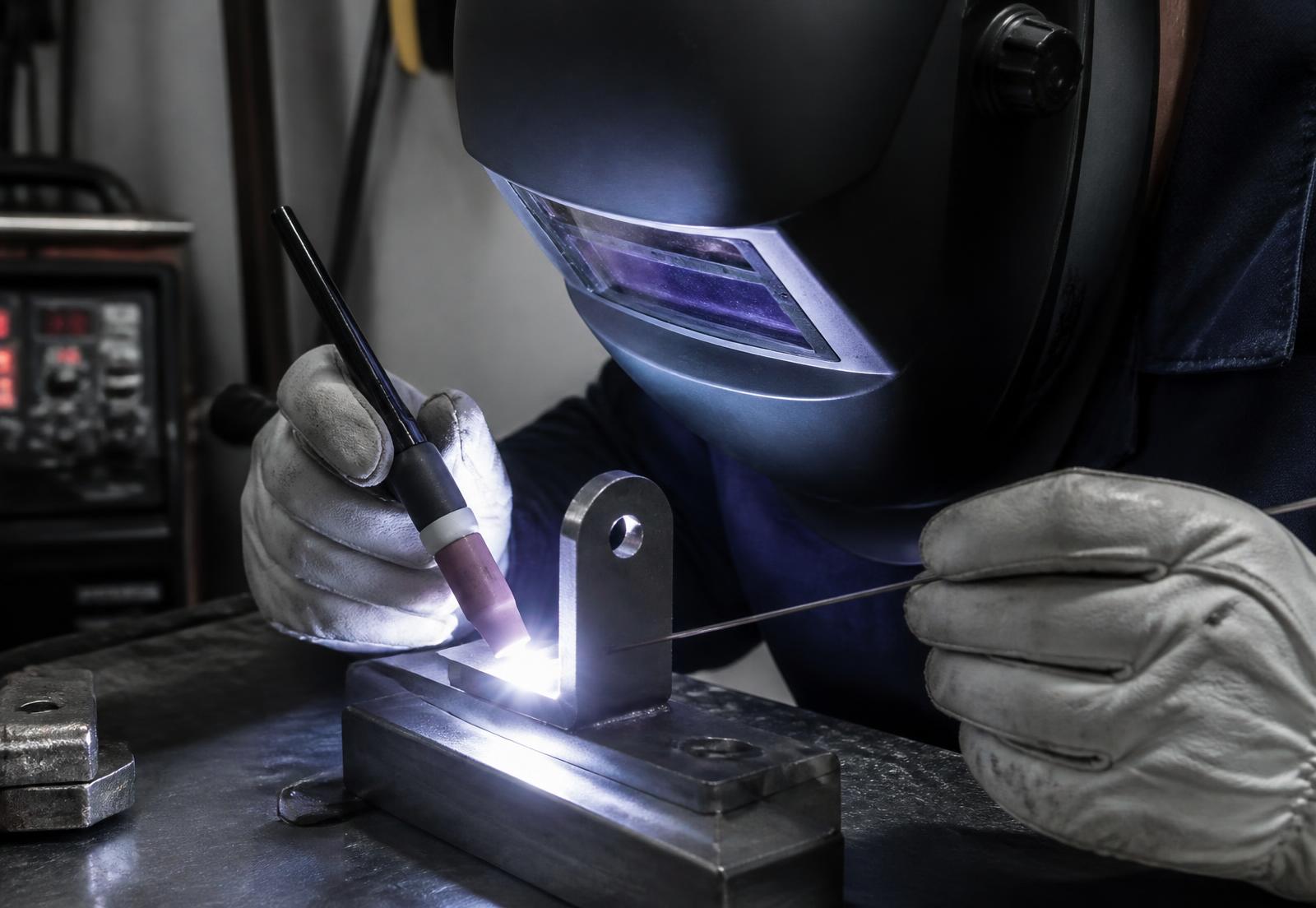
Used where the weld has to be neat and controlled: stainless steel, thin wall tube, food and hygiene work, and visible welds on restoration jobs.
03
MMA welding
Stick welding for heavy or dirty material, outdoor work and repairs to plant and agricultural machinery where conditions are less than ideal.
Typical welding jobs
- Cracked and broken brackets, mounts and lugs
- Trailer, plant and machinery frame repairs
- Exhaust, chassis and bodywork sections on classic vehicles
- Stainless handrail, tank and hygiene-area work
- Gate, railing and balustrade repairs and alterations
- Modifications to existing equipment and guarding
Welding across the area
Welding work is carried out for customers throughout the region — the towns below have their own pages covering the sort of jobs that come in most often.
- Welding in Cannock
- Welding in Stafford
- Welding in Wolverhampton
- Welding in Walsall
- Welding in Tamworth
- Welding in Telford
Need something welded?
Send over a drawing, a sketch, a photograph or the part itself and you will get a straight answer on cost, method and timescale.